Total Wine & More · Enterprise B2B · 2025 to present
Rebuilding a critical ordering tool after its core feature was cut
I lead UX for the migration of Order Requests, the tool supply chain and merchandising teams at Total Wine & More use to override automated ordering, from a legacy system to a new platform. It handles thousands of requests a week across five business units, and a wrong edit there puts the wrong inventory on a purchase order.
This work is under NDA. This page shares the thinking, without screens; I'm happy to walk through details in an interview.
Project facts
- Role
- Lead UX Consultant (contract, via Thoughtworks), sole designer on the product
- Client
- Total Wine & More, the largest independent retailer of wine, beer and spirits in the US, 250+ stores
- Product
- Order Requests (ORs), on the Fusion platform
- Users
- Supply chain and merchandising teams
- Team
- A dedicated product and engineering team
- Timeline
- December 2025 to present
Scope
- 9states in the new status lifecycle, up from 2
- 14legacy editing rules, translated into one matrix
- 3systems mapped, action by action
- 8business units covered in discovery
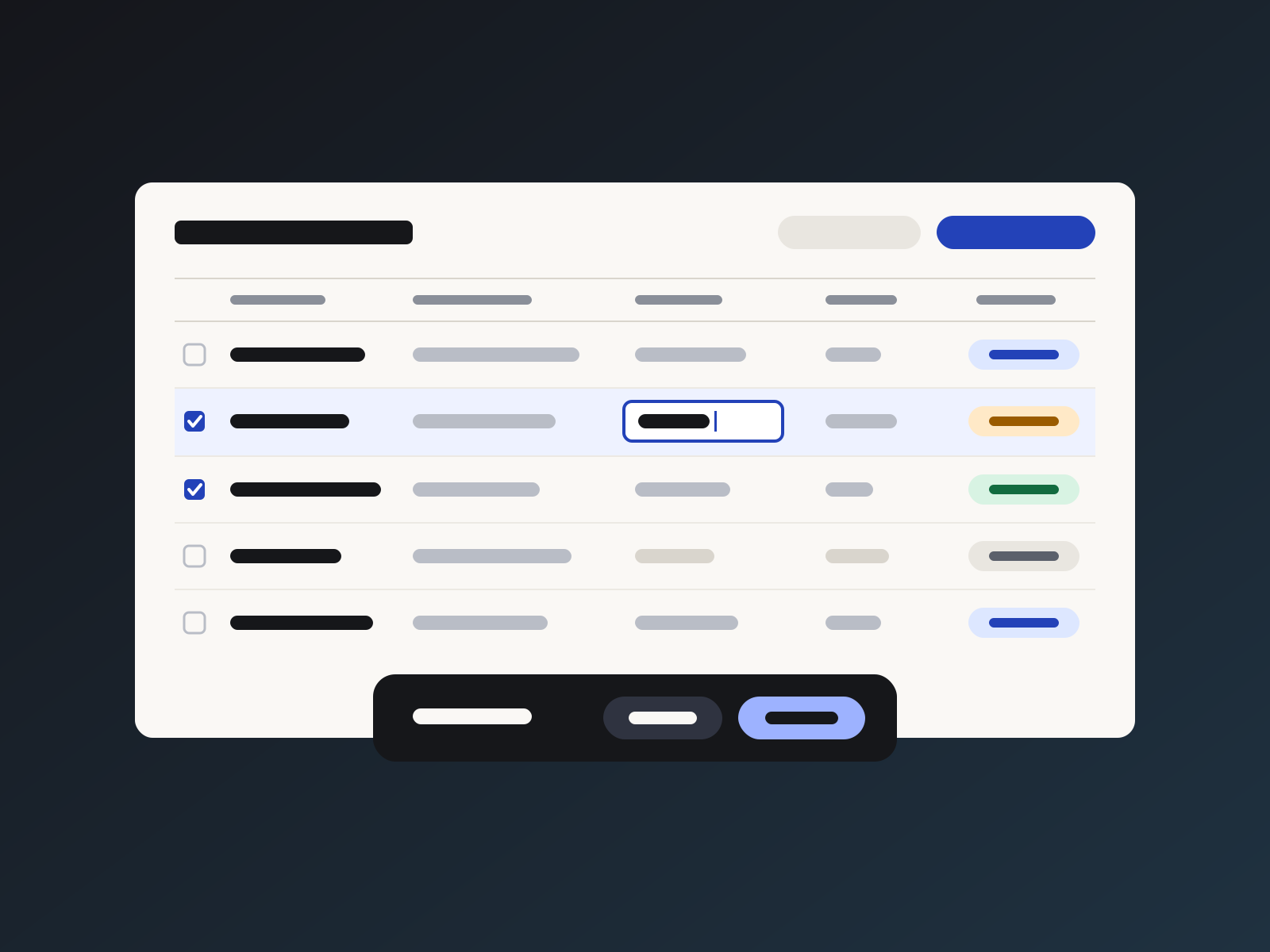
A small tool with large consequences
Ordering at Total Wine & More is automated. Order Requests is where supply chain and merchandising teams step in and override it. It handles thousands of requests a week across five business units.
The stakes are concrete: a wrong edit puts the wrong inventory on a purchase order. The job was to move the tool from a legacy system to a new platform.
Discovery across eight business units
I synthesized discovery across eight business units into three things the team could act on:
- Prototypes.
- A gap analysis.
- The question set that shaped inception.
When the plan changed
The hard part wasn't the screens. Midway through, the validation engine the product was planned around was cut, because the data it needed didn't exist in the new platform.
I mapped every user action across the three systems involved: entry, fulfillment and reporting.
WhyProduct, engineering and the business could work from one shared picture of what the product could and couldn't do.
A status model people can read
The legacy tool had a binary status: complete or incomplete. I redesigned it into a 9-state lifecycle that users can actually read.
14 editing rules, one matrix
The legacy system had 14 editing rules, described across several source documents. I translated them into a field-by-status matrix: for each field, in each status, whether it can be edited.
Building the matrix surfaced the conflicts between the source documents before they reached engineering.
Prevention, not correction
I designed creation, inline editing and bulk editing around prevention. Users can't make an invalid change, instead of being told afterwards that they did.
I took the work from lo-fi through AI-assisted prototyping to high fidelity, presenting to design leadership and business stakeholders along the way.
Reflection
The screens were the easy part. What moved the project was the shared picture: once product, engineering and the business could see every action across all three systems, we could agree on what the product could and couldn't do.
Next case study
Adobe Express: AI Presentations and PrintContact
Looking for a Lead UX or Product Designer? Let's talk.
I'm open to Lead and Principal roles in UX and product design, remote or based in Bucharest. The quickest way to reach me is email.